
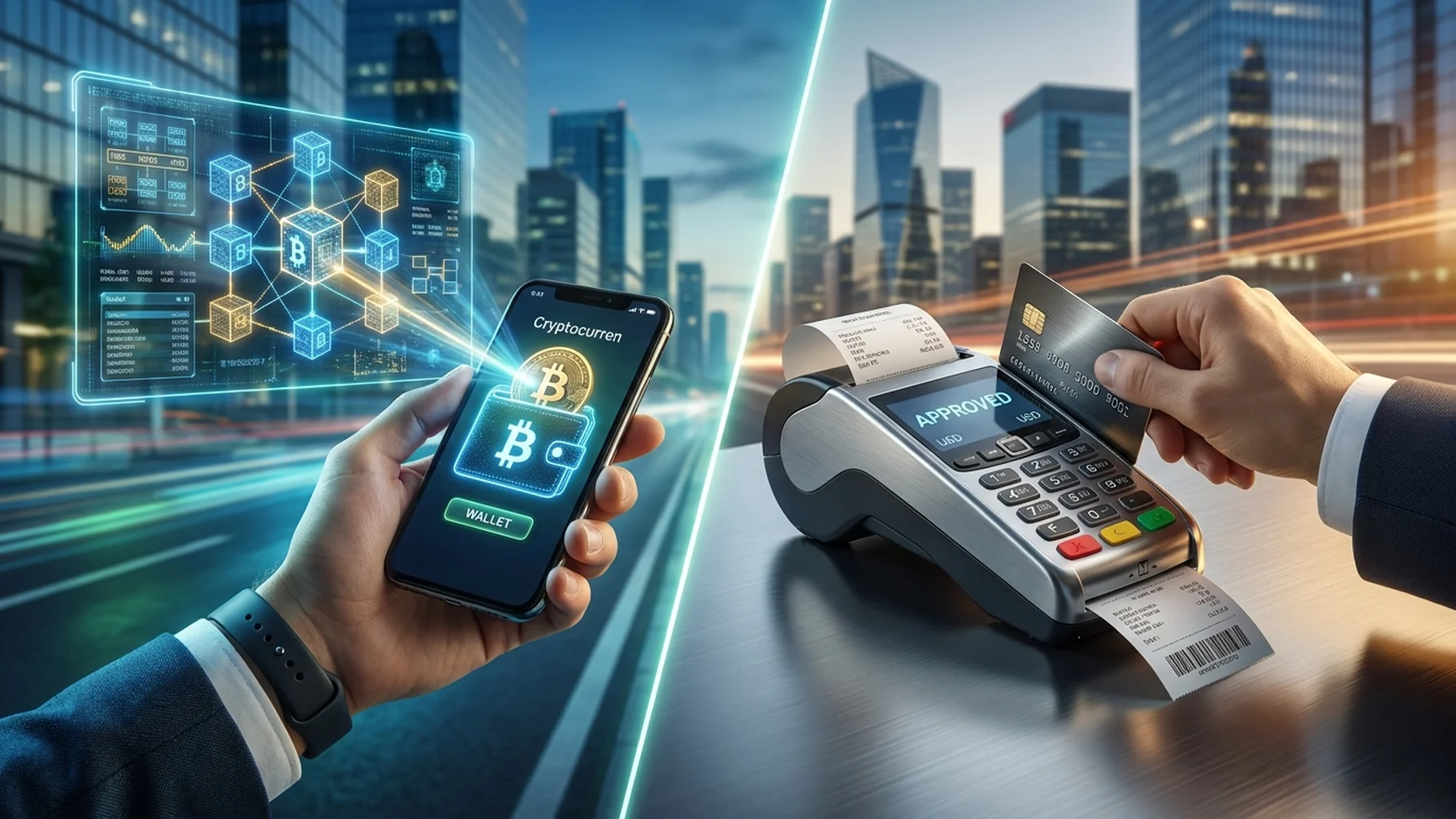
Crypto Transactions Versus Card: Understanding Payment Differences
Contents
The comparison between crypto transactions and card payments is becoming increasingly important as digital currencies gain traction. Understanding the differences and similarities between these options is crucial for consumers and businesses alike. This article explores the key distinctions in terms of fees, security, speed, and acceptance.
Interchange Fees in Crypto Transactions Versus Card Payments
Interchange fees are a significant part of card transaction costs. Visa and Mastercard, the largest card networks, charge fees that vary by transaction type and merchant. In contrast, crypto transactions typically have lower fees, as they don't involve traditional card networks.
Here's a breakdown of typical card fees:
| Card Type | Percentage Fee | Fixed Fee |
|---|---|---|
| Visa | 1.5% - 2.5% | $0.10 - $0.30 |
| Mastercard | 1.6% - 2.6% | $0.10 - $0.35 |
Crypto payments bypass these fees, offering potential cost savings for businesses, but they may incur network fees that vary by blockchain.
Comparing Transaction Features: Crypto vs. Card
Both crypto and card payments have distinct characteristics. Understanding their differences can help in choosing the right method.
| Feature | Crypto Transactions | Card Transactions |
|---|---|---|
| Transaction Speed | Varies; depends on network congestion | Typically instant or within seconds |
| Fees | Network-dependent, often lower overall | Includes processing and bank fees |
| Security | Decentralized with blockchain integrity | Centralized, reliant on bank security |
| Privacy | Pseudonymous | Linked to personal data |
| Acceptance | Growing but less widespread | Widely accepted globally |
This table outlines key differences, helping you decide which method suits your needs.
Steps to Evaluate Crypto and Card Payment Options
When choosing between crypto transactions and card payments, consider the following steps:
- Examine transaction speed: Determine how each method handles payment processing times.
- Analyze security features: Investigate the security measures of crypto wallets and card issuers.
- Compare fees: Look at costs associated with each payment method, including any hidden charges.
These steps can guide you in making informed payment decisions, ensuring the best choice for your financial requirements.
Acquirer and Issuer Roles in Card Payments
In card payments, an acquirer handles transactions for the merchant, while the issuer is the cardholder's bank. Both parties take a percentage of each transaction, impacting overall costs. Crypto transactions eliminate these intermediaries, potentially reducing fees and speeding up transactions.
Buy Now, Pay Later (BNPL) and Crypto Alternatives
BNPL is a growing payment option, allowing consumers to defer payments. While cards are commonly used, crypto offers an alternative, providing lower fees and faster settlements, appealing to BNPL providers seeking cost-effective solutions.
Comparing Payment Networks: SWIFT vs. Ripple
SWIFT is a reliable but slower traditional payment network. Ripple, a blockchain-based system, offers faster, cheaper cross-border transactions. This shift reflects a broader trend toward crypto rails, emphasizing efficiency and cost savings.
ACH and Wire Transfers Compared to Crypto
ACH and wire transfers are common for bank transactions. ACH is slower and cheaper, while wire transfers are faster but costly. Crypto combines speed and low costs, making it an attractive option for both businesses and consumers.
Instant Payment Systems and Crypto's Alignment
Systems like SEPA Instant enable real-time transactions in Europe. These align with the demand for faster payments. Crypto transactions fit well into this trend, offering immediate settlements without complex banking infrastructure.
Impact of Crypto on Card Networks' Revenue
Card networks like Visa and Mastercard derive significant revenue from transaction fees. With the rise of crypto payments, these networks may face pressure to innovate, potentially affecting their revenue streams.
Streamlining Payments with Facilitators and Orchestration
Payment facilitators and orchestration platforms simplify transactions by integrating various methods, including crypto. This integration can enhance user experience and operational efficiency, providing businesses with a competitive advantage.
ISO 20022 and Crypto's Role in Payment Messaging
ISO 20022 is the upcoming standard for data exchange in financial transactions. Crypto's compatibility with digital standards positions it well for seamless global payment processing, paving the way for efficient cross-border transactions.
Advancing Payment Systems: FedNow, UPI, and PIX
Real-time payment systems like FedNow, UPI, and PIX are transforming transactions worldwide. These systems offer instant capabilities, similar to crypto transactions, and their evolution could further enhance the efficiency of payments.
Regulations, Fraud, and Crypto Payments
Regulatory frameworks are adapting to new payment methods to ensure security and compliance. Crypto payments face regulatory challenges, but advances in AI and biometrics are improving security measures, making crypto a more viable option for secure transactions.
AI, Biometrics, and the Future of Payments
Technologies like AI, biometrics, and IoT are reshaping the payments landscape. These innovations offer enhanced security and convenience, synchronizing well with crypto's attributes. As these technologies evolve, they could lead to new payment solutions.
Conclusion: Choosing Between Crypto and Card Payments
The debate between crypto transactions versus card payments continues to evolve. Each method offers unique benefits and challenges influenced by technological advancements and market demands. Staying informed about these differences is crucial for making the best payment choices.